You can plug your Citadel address into an online estimator and get a number in seconds. It feels quick and helpful when you are just starting to plan a sale or refinance. But when real money and timing matter, that number often misses what makes your home unique. In this guide, you will learn how a Comparative Market Analysis, or CMA, gives you a more accurate price range for a Citadel home, and how to use it to set a smart list strategy. Let’s dive in.
Online estimates vs a CMA
Online estimates use Automated Valuation Models, or AVMs. These tools pull data like recent sales, property size, bed and bath counts, and assessed values. They run that data through statistical models to produce a quick estimate. AVMs are fast, free, and a useful first reference.
A CMA is different. A local agent handpicks comparable sales, studies active and pending listings, and adjusts for differences such as renovations, lot features, basement finish, and market timing. A CMA also folds in what is happening on the ground in Citadel right now, including buyer demand and days on market.
Here is the simple comparison:
- Online estimates: quick baseline, limited view of condition, upgrades, or micro-location.
- CMA: curated comps, real-time market context, and specific adjustments for your home.
- Bottom line: use an AVM to get oriented, then rely on a CMA to set your price.
What AVMs miss in Citadel
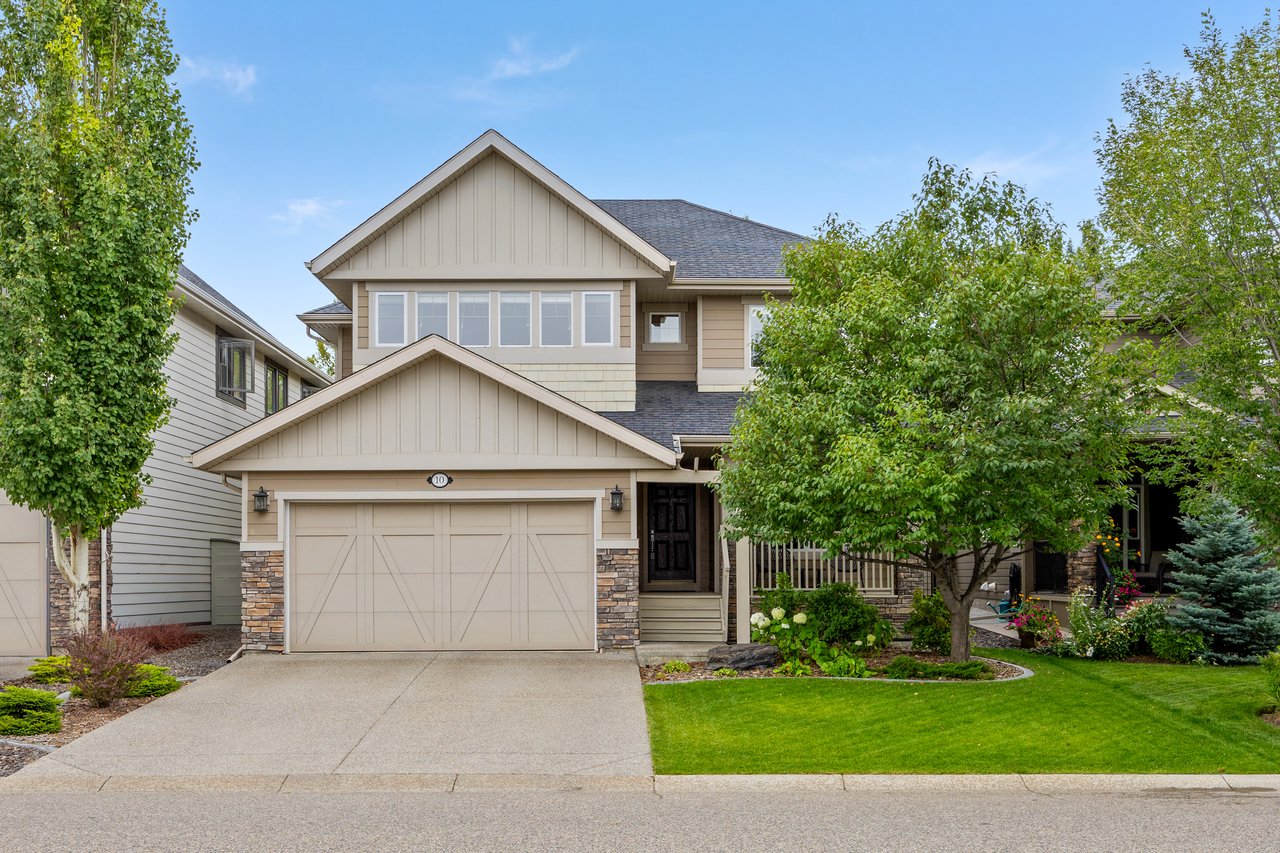
Citadel’s housing stock is mostly single-family homes and townhomes built in the late 1990s to 2000s. Within that, values can vary a lot based on details AVMs often miss or underweight.
- Finished basements: In Calgary-style homes, a finished basement can have a major impact on buyer interest and price. AVMs may not detect the finish level or permits.
- Garage type and size: An attached double garage vs a single can shift the buyer pool and pricing.
- Lot and exposure: Backing greenspace, cul-de-sac locations, or southern backyard exposure are often premiums. Fronting or backing a busier road can be a discount.
- Condition and upgrades: A refreshed kitchen and updated baths change your comp set. Paint, flooring, windows, roofing, and mechanicals all matter.
- Micro-location: Proximity to parks, schools, transit corridors, and shopping inside Citadel influences demand. Small distances can change outcomes.
These differences show up clearly when you compare photos and remarks from recent MLS sales, but they may not be captured cleanly in an algorithm.
How a Citadel CMA is built
A strong CMA follows a repeatable process. Here is what that looks like when you price a Citadel home.
Step 1: Define the subject
- Confirm lot size, above-grade and total finished square footage, bed and bath counts, garage type, age, and basement finish.
- Document upgrades: kitchen and bath renovations, flooring, windows, roofing, mechanicals, and any suite status with permits.
- Gather photos and, if available, contractor receipts or permits for major work.
Step 2: Select comparables
- Start with 3 to 6 recent solds inside Citadel from the last 3 to 6 months. In slower periods, extend to 6 to 12 months and note why.
- Add active and pending listings to understand current competition and price ceilings.
- If Citadel solds are thin, carefully expand to adjacent neighborhoods with similar age and product type. Explain why those are valid proxies.
Step 3: Match and adjust
- Match first on core attributes: detached vs semi vs townhouse, living area, bed and bath counts, lot size, age, and basement finish.
- Adjust for feature differences: square footage, extra bathrooms, finished basement, garage size, lot traits like backing park or corner lot, and upgrade level.
- Time-adjust older sales to reflect current conditions when the market is moving quickly.
Step 4: Reconcile a price range
- After adjustments, you should have a low-to-high range and a most-likely value.
- Present at least three figures: conservative low, most-likely, and optimistic high. Explain the assumptions behind each.
Step 5: Translate to list strategy
- Seller’s market: consider listing near or slightly above the reconciled value to test demand.
- Balanced market: price close to fair market value and watch early traffic closely.
- Buyer’s market: price competitively to lead the pack and reduce time-on-market.
Renovations and value: what to know
Not all upgrades influence price the same way. A CMA will sort upgrades into categories and compare them to the right comps.
- Cosmetic updates: Fresh paint, lighting, and flooring improve appeal and can reduce buyer objections. Expect partial cost recovery.
- Kitchen and bath renovations: These typically drive stronger buyer response and can change your comp set if quality and style stand out.
- Added living area or suites: A permitted suite or significant addition can materially change value. Legal status matters for financing and buyer confidence.
Practical tip: Document scope and quality with receipts, permits, and before-and-after photos. Your CMA should reference sold homes with similar improvements rather than guessing return on cost.
Market velocity and pricing position
Two simple metrics help you set expectations:
- Months of inventory: active listings divided by average monthly sales.
- Less than 3 months signals a seller’s market.
- 3 to 6 months indicates a balanced market.
- More than 6 months points to a buyer’s market.
- Absorption rate: the inverse of months of inventory, or monthly sales divided by active listings.
Why it matters: In Citadel and across NW Calgary, tighter inventory narrows price bands and shortens days on market, while higher inventory widens price spreads and slows sales. Your CMA should reflect the most recent local stats and adjust your list strategy accordingly.
Reconciling your online estimate with a CMA
If your online estimate and your CMA do not match, work through this checklist.
- Verify the basics: Is the living area accurate? Are bed and bath counts correct? Is the basement finish captured?
- Check the comps the AVM used: Are they recent enough and inside Citadel? Did it include atypical sales like bank or estate transactions?
- Inspect for missing features: Did the AVM miss your kitchen or bath renovation, new roof, or upgraded windows?
- Consider micro-location: Do you back a park, face a busier road, sit on a corner lot, or have southern exposure?
- Account for timing: In a fast market, AVMs can lag and misread the current trend.
Common outcomes:
- Underestimates happen when your home has recent, high-quality upgrades or desirable lot features not visible in public data.
- Overestimates happen when the AVM leans on out-of-area comps or your interior condition is more dated than the data suggests.
Quick Citadel seller checklist
Before you request a CMA, gather:
- Floor plan or measurements for above-grade and total finished space.
- List of upgrades with dates and any permits, especially for kitchens, baths, windows, roofing, HVAC, and suites.
- Notes on lot features: exposure, backing greenspace, corner or cul-de-sac location.
- Recent utility information and maintenance records that show care and condition.
- Preferred timing, tenancy, and any constraints that could affect access or closing.
Example scenarios
Here are two simplified scenarios that show why a CMA matters in Citadel. These are illustrative examples, not actual sales.
Upgraded two-storey with finished basement
- Facts: Late-1990s two-storey, attached double garage, fully finished basement, recent kitchen and bath renovations, south backyard facing a small green.
- AVM result: The estimate leans on average-condition sales and assigns little value to the renovations or lot orientation.
- CMA approach: Selects renovated comps in Citadel from the last 3 to 6 months, adjusts for basement finish and the green-facing lot, and time-adjusts an older renovated sale. The reconciled value lands above the AVM and supports a stronger list price with limited days on market.
Dated bungalow near a collector road
- Facts: Early-2000s bungalow, original finishes, unfinished basement, single garage, fronts a busier collector.
- AVM result: The estimate lifts from nearby renovated bungalow sales and does not penalize for location or condition.
- CMA approach: Uses dated-condition solds, applies a location adjustment for the collector road, and references a recent expired listing as a cautionary ceiling. The reconciled value lands below the AVM, guiding a competitive list price and realistic timelines.
Bringing it together
Pricing a Citadel home well is about matching your property to the right comps, adjusting for real features, and reading the current market. An online estimate is a fine starting point. A Citadel-specific CMA turns that starting point into a confident plan that protects your time and equity.
If you are thinking about selling or just want a clear price range, you can get a personalized CMA, plus guidance on staging, professional photography, and property video to position your home for the best result. Reach out to The McKELVIE GROUP for a free home evaluation and a conversation about your goals.
FAQs
What is a CMA for a Citadel home?
- A CMA is a local, agent-prepared analysis that compares your home to recent sold, active, and pending listings in Citadel, then adjusts for features, condition, and timing to produce a realistic price range.
How accurate are online estimates in Citadel?
- Online estimates are useful baselines, but they often miss renovations, basement finish, and micro-location factors like backing greenspace or fronting a busier road, which can shift value up or down.
How do renovations influence my price?
- Kitchen and bathroom updates and a finished basement usually have the strongest impact, especially when quality is high and work is permitted; cosmetic updates mainly improve marketability and time-on-market.
What if there are few recent Citadel sales like mine?
- A CMA can extend the search window and carefully include nearby neighborhoods with similar homes while documenting why those comps are valid and applying time and feature adjustments.
Do I need an appraisal to sell my home?
- A CMA is sufficient for pricing strategy and listing, while a formal appraisal may be required for lending, estate, or legal purposes; your agent can advise if an appraisal makes sense for your situation.
How do market conditions affect my list price?
- In a seller’s market with low months of inventory, you can list near or slightly above the reconciled value; in a balanced or buyer’s market, pricing closer to fair market or competitively is typically more effective.